



























Skip to content
Report writing services for skilled migration

List of ANZSCO Codes for Professional Engineers

Navigate the Australian skilled occupation classification system with the list of ANZSCO Codes for Professional Engineers and choose the right one for you with ease.

  • EA guideline followed
  • Error Free
  • Well Structured
  • Relevant Information
Free consultation

Get CDR Engineers Australia

Tell us your ANZSCO code and where you are up to. A practising engineer replies within one business day.

No obligation. Your details stay private and are never shared.

ANZSCO Codes and Your Skilled Migration to Australia

As an overseas engineer planning to migrate to Australia, you must be familiar with the Competency Demonstration Report (CDR) that is required for your skilled migration to Australia. A CDR report is a crucial document that engineers need to submit to Engineers Australia to showcase their qualifications, experience, and competencies to excel in their chosen engineering domain. The selected candidates obtain skilled visas to Australia.

There are a series of aspects that play significant roles in the assessment of your skilled migration application. One such aspect is the ANZSCO code.

What is ANZSCO?

ANZSCO stands for Australian and New Zealand Standard Classification of Occupations and it is a system used to classify jobs and occupations in Australia and New Zealand. It’s a joint initiative between the Australian Bureau of Statistics (ABS), Statistics New Zealand, and the Department of Jobs and Small Business. ANZSCO codes are crucial in the migration process, as they help determine that you are eligible to work as an engineer in Australia in your chosen discipline. Contact Us if you require any consultation.

Understanding ANZSCO Skill Level

ANZSCO Skill Level is a classification that reflects the amount and type of training, education, and experience required to perform the tasks and duties of a specific engineering discipline competently. Skill levels range from 1 to 5, with 1 being the highest level requiring the most expertise.

  1. Skill Level 1

    It corresponds to a bachelor’s degree or higher qualification, or at least 5 years of relevant experience. In some instances, a combination of both can be required.
  2. Skill Level 2

    A Skill Level 2 occupation requires an AQF Associate Degree, Advanced Diploma, or Diploma, or at least three years of relevant experience.
  3. Skill Level 3

    For Skill Level 3, an AQF Certificate IV or AQF Certificate III, including at least two years of on-the-job training, or at least three years of relevant experience is necessary.
  4. Skill Level 4

    This level corresponds to an AQF Certificate II or III, or at least one year of relevant experience.
  5. Skill Level 5

    Skill Level 5 occupations require an AQF Certificate I, or compulsory secondary education, or at the very least, some short-term on-the-job training.

List of ANZSCO Codes For CDR Reports

Understanding the various ANZSCO codes for professional engineers can be daunting. Each ANZSCO code is a unique six-digit number where the first two digits represent the major group, the third digit denotes the sub-major group, and the fourth digit signifies the minor group. The last two digits specify the unit group and occupation. Below is the ANZSCO code list that will help you navigate through different ANZSCO codes for different engineering occupations in Australia. Choose the right ANZSCO code for your CDR Report.

  • ANZSCO 233112

    Material Engineers

  • ANZSCO 133211

    Engineering Manager

  • ANZSCO 233111

    Chemical Engineers

  • ANZSCO 312212

    Civil Engineers

  • ANZSCO 233212

    Geotechnical Engineers

  • ANZSCO 233214

    Structural Engineers

  • ANZSCO 233215

    Transport Engineers

  • ANZSCO 233311

    Electrical Engineers

  • ANZSCO 233411

    Electronics Engineers

  • ANZSCO 233511

    Industrial Engineers

  • ANZSCO 233512

    Mechanical Engineers

  • ANZSCO 312212

    Material Engineers

  • ANZSCO 233611

    Mining Engineers

  • ANZSCO 233612

    Petroleum Engineers

  • ANZSCO 233911

    Aeronautical Engineers

  • ANZSCO 233912

    Agricultural Engineers

  • ANZSCO 233913

    Bio-Medical Engineers

  • ANZSCO 233914

    Engineering Technologists

  • ANZSCO 233215

    Environmental Engineers

  • ANZSCO 233999

    Engineering Professional

  • ANZSCO 312311

    Computer Network and System Engineers

  • ANZSCO 263311

    Telecommunication Engineers

  • ANZSCO 263312

    Telecommunication Network Engineers

  • ANZSCO 263311

    Civil Engineering Draftperson

  • ANZSCO 233513

    Production or Plant Engineers

  • ANZSCO 312211

    Electrical Engineering Draftsperson

  • ANZSCO 312312

    Electrical Engineer Technician

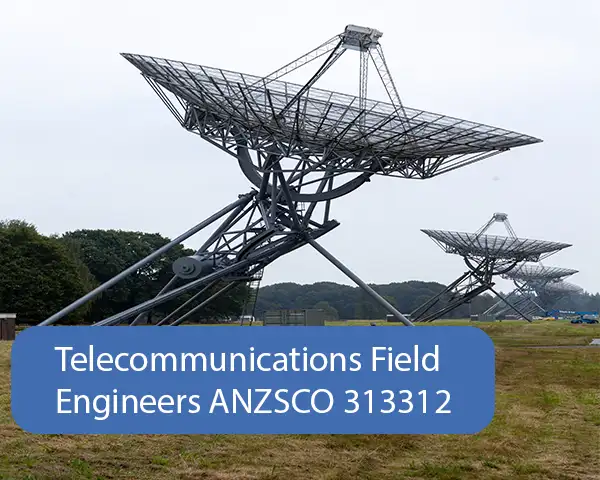
  • ANZSCO 313312

    Telecommunications Field Engineers

How to Choose the Right ANZSCO Code for CDR?

It is crucial to understand the roles and responsibilities for your nominated engineering domain to choose the right ANZSCO code for your CDR report. You must perform the ANZSCO codes search thoroughly and understand the roles, tasks, and responsibilities associated with it. Your CDR report should align with your nominated ANZSCO code.

Tips for Aligning Your CDR with ANZSCO

You can immensely increase your chances of a successful skill assessment by aligning your CDR Report with your nominated ANZSCO code. Below are the tips on how you can align your CDR with ANZSCO.

  • Research your ANZSCO code thoroughly and understand the roles, tasks, and responsibilities associated with it.
  • Ensure that your career episodes demonstrate your skills and qualifications in the context of your ANZSCO code.
  • Use relevant engineering terminologies and concepts that align with your ANZSCO code to showcase your expertise in the field.
  • Provide evidence of how your work experience and projects have contributed to meeting the competency requirements of your nominated occupation.
  • Highlight your achievements and accomplishments that demonstrate your ability to excel in your nominated occupation as per the ANZSCO code.

Importance of ANZSCO Codes in CDR

An ANZSCO code in your CDR Report is important for a successful EA Skills Assessment. It allows Engineers Australia to assess your engineering competencies and verify that your skills and qualifications align with the nominated occupation. You can go through the ANZSCO code list and determine the ANZSCO code that fits your chosen engineering domain. You must choose the right ANZSCO code to ensure that your CDR is tailored to the specific requirements of that engineering domain.

How ANZSCO Codes Impact Your CDR Outcome

The right ANZSCO code can positively impact your CDR outcome. It helps in demonstrating your suitability for the chosen occupation and increases your chances of a successful skills assessment. When writing your CDR Report, you should ensure that the report aligns your Career Episodes with the competencies and tasks outlined for your chosen ANZSCO code. It showcases your competency in the chosen field.

How CDR Engineers Australia Can Help You?

CDR Engineers Australia understand the importance of well-crafted CDR reports and their role in skills assessment. Our professional CDR writers have in-depth knowledge of ANZSCO codes and the CDR writing process. We can help you with your ANZSCO search by navigating through your ANZSCO skill level and choosing the right ANZSCO code for your CDR report. We also offer CDR report writing services to prepare CDR report on your behalf and make sure that it meets all the criteria set by Engineers Australia. With our expertise and guidance, you can confidently embark on your Migration to Australia for a fulfilling engineering career.

Talk with an expert

Get Free Consultation from our Expert Report Writers

Our professional CDR writers have in-depth knowledge of ANZSCO codes and can help you choose the right one for your report.

Testimonials

Don't Believe us, Check Client Word

4.8

1,900+ customers

I had already been rejected once on my own attempt. The team rebuilt two of my Career Episodes around the drainage work I actually led, not the whole project, and the Summary Statement finally referenced real paragraphs. Positive outcome in eight weeks.
R

Rahul M.

Civil Engineer · 233211

What convinced me was that my writer was a practising mechanical engineer. He asked about pump cavitation and NPSH margins, not just what my job title was. That is when I knew the report would hold up.
A

Ayesha K.

Mechanical Engineer · 233512

I work night shifts and I could still reach someone whenever I panicked about a deadline. Three rounds of revisions, no extra charge, no arguments about scope.
B

Bikash T.

Electrical Engineer · 233311

The ACS RPL was written around two projects I nearly left out because I thought they were too small. They turned out to cover most of the key knowledge areas. Cleared on the first submission.
S

Sandeep R.

ICT Professional · 261313

Why choose us

Our Hundreds of Clients are getting Successful Approval, When will you?

Our primary goal is to see our client’s successful approval with a well-formed report following proper guidelines created for the migrants. CDR Engineers Australia provides high-quality services to achieve 100% customer satisfaction.

Affordable CDR Report

Our report writing services for Engineers Australia Skills Assessments ensure the perfect balance between high-quality reports and affordability. Our competitive Pricing structure of report writing, including the CDR report writing cost, doesn’t hold you back from your skilled migration. Our report writing costs, including CDR Report Writing price, are always transparent and there are no hidden fees or any sort of surprise costs. It makes our CDR report writing services accessible to every engineer, even those who have a low budget to hire a CDR writer in Australia.

Get Free Consultation from our Expert Report Writers

FAQ

Frequently Asked Questions

ANZSCO stands for the Australian and New Zealand Standard Classification of Occupations. It’s a system that classifies occupations in Australia and New Zealand into a standardised structure for collecting, publishing, and analysing occupation-related data.